Supply chains rarely fail because of a single dramatic event. More often, disruption builds quietly through misaligned inventory buffers, poorly positioned stock, or warehousing infrastructure that cannot flex under pressure. In 2026, as global trade routes continue to face uncertainty and demand patterns grow less predictable, the warehousing strategy behind a supply chain has become one of the clearest indicators of how well a business will hold up when conditions shift. Getting this strategy right means more than choosing storage space. It means making deliberate decisions about location, capacity, technology, and partnerships that collectively determine whether a supply chain bends or breaks.
How warehouse positioning shapes supply chain agility
The physical location of warehouse and terminal infrastructure directly influences how quickly a supply chain can respond to disruption. When warehousing is positioned close to key transport corridors, port access points, or major industrial clusters, goods can move through the network with fewer delays and lower exposure to bottlenecks. Distance between nodes is not just a cost factor. It is a resilience factor.
Agility in logistics depends on the ability to reroute, buffer, or accelerate flows at short notice. A well-positioned distribution network provides planners with exactly that option. When warehouses are embedded within multimodal infrastructure, the range of available transport options widens, reducing dependence on any single mode or corridor. This flexibility becomes especially valuable during periods of supply chain disruption, when the ability to shift between options quickly can mean the difference between a minor delay and a significant operational failure.
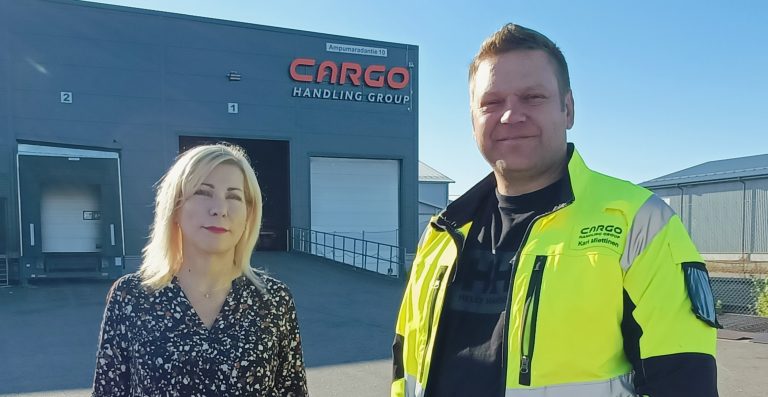
Cargo Handling Group operates warehousing facilities in Kouvola and at HaminaKotka port, two locations that sit within Finland’s most strategically significant logistics corridors. With over 40,000 square metres of modern warehouse space and direct access to both road and port infrastructure, this positioning supports the kind of responsiveness that industrial supply chains require. For businesses managing time-sensitive or high-volume flows, proximity to these nodes reduces the risk exposure that comes from longer, less flexible routing — and it is precisely this geographic positioning that Cargo Handling Group has built its operational model around.
Key warehousing decisions that strengthen or weaken resilience
Warehouse management decisions made during stable periods often determine how well a supply chain performs during unstable ones. The choices that matter most include inventory positioning, storage configuration, handling capacity, and the level of operational redundancy built into the system.
Inventory positioning and buffer strategy
Holding inventory in the right location, rather than simply holding more of it, is central to resilient inventory management. Strategic buffering at key nodes in the distribution network allows businesses to absorb demand spikes or supply shortfalls without cascading delays. The challenge lies in identifying which nodes carry the most risk and ensuring adequate capacity exists there before disruption occurs. Cargo Handling Group addresses this challenge directly by offering flexible capacity allocation across its facilities, allowing clients to position stock where it delivers the greatest protective value within their supply chains.
Storage configuration and handling capability
Not all warehousing infrastructure is suited to all cargo types. A resilient warehousing strategy accounts for the specific requirements of the goods being stored. Floor load capacity, clear height, door dimensions, and handling equipment all affect what can be stored and how quickly it can be processed. Cargo Handling Group’s facilities support diverse cargo types — from palletised goods and rolls to bulk materials and large-format items — offering greater flexibility when product mixes change or new supply streams need to be accommodated.
Operational decisions around customs status also carry significant weight. Cargo Handling Group holds customs warehouse authorization across its facilities, allowing goods to be stored without immediate duty payment. This supports more flexible inventory management across international supply chains and serves as a practical advantage for businesses managing cross-border flows under time pressure.
Integrating digital tools into a resilient warehousing model
Digital integration in warehouse operations supports resilience by improving the speed and accuracy of information across the supply chain. When warehouse management systems connect directly with customer platforms through EDI or XML data transfer, the visibility of stock movements, inbound shipments, and dispatch confirmations improves significantly. Decisions can be made on current data rather than estimates.
Scanning-based cargo handling reduces processing errors and creates a reliable audit trail for each movement within the facility. Automated driver check-in systems and loading call processes reduce waiting times and improve throughput during peak periods. These are not abstract technology investments. They are operational tools that directly affect how reliably goods move through the warehousing node and how quickly exceptions are identified and resolved.
The logistics industry is moving toward greater automation and data integration across the entire supply chain. Cargo Handling Group has invested in digital infrastructure — including EDI and XML connectivity and scanning systems — reflecting a clear understanding of the direction the industry is heading and what will need to be considered and leveraged by warehousing partners in the future. This existing capability means that businesses working with Cargo Handling Group can integrate warehousing operations into their broader supply chain environments without friction or delay.
Building long-term resilience through logistics partnerships
Resilience is not a one-time configuration. It requires ongoing adjustment as supply chains evolve, trade patterns shift, and operational demands change. A logistics partnership built on consistent performance and deep operational knowledge contributes more to long-term supply chain resilience than any single infrastructure investment.
Long-term partnerships allow warehousing operations to be calibrated to the specific needs of an industrial client over time. Handling procedures, storage configurations, data interfaces, and capacity allocations can all be refined based on accumulated operational experience. This kind of institutional knowledge is difficult to replicate quickly and represents a genuine competitive advantage for businesses that invest in stable logistics relationships. Cargo Handling Group actively develops this depth of understanding with its clients, treating each operational relationship as a long-term collaboration rather than a transactional service arrangement.
Cargo Handling Group has built its warehousing and terminal operations around the needs of industrial clients across sectors including paper, pulp, glass processing, and engineering. The secured and guarded terminal areas, customs warehouse authorization across facilities, and flexible handling capabilities for diverse cargo types reflect an operational model designed for reliability under real industrial conditions. For supply chain managers evaluating where to anchor their warehousing strategy, these are the factors that determine whether a partner can genuinely support resilience or simply provide storage space.
Cargo Handling Group: warehousing built for supply chain resilience
A robust warehousing strategy requires more than square metres. It requires infrastructure positioned within active logistics corridors, digital systems that support accurate and timely information flow, and a partner with the operational depth to adapt when conditions change. Cargo Handling Group provides warehousing and terminal services from Kouvola and HaminaKotka port, with modern facilities suited to demanding industrial cargo, customs warehouse authorization, and digital interfaces that connect directly with client systems. Businesses looking to strengthen their supply chain resilience through reliable warehousing will find in Cargo Handling Group an operational foundation and long-term partnership approach that is purpose-built for the demands of industrial logistics. Contact Cargo Handling Group to discuss how our warehousing services can support your supply chain objectives.

Related Articles
- Why proactive supply chain management reduces costs and operational risks
- How efficient terminal handling speeds up cargo flow
- Common customs clearance mistakes – and how companies can avoid them
- What types of cargo can be handled in modern warehouse facilities?
- How does intermodal transportation operate in a container terminal?